
Prerequisites
The Biological Bottom Line
High-Performance Liquid Chromatography (HPLC) is non-negotiable. A pharmaceutical-grade peptide shows a single sharp peak exceeding 98.0% purity with zero satellite degradation peaks.
Purity does not prove identity. Mass spectrometry (MS) verifies that the molecular mass matches the exact theoretical sequence down to within ±1 Dalton.
A vial can be 99% pure peptide and still cause severe fevers or sterile abscesses if it contains bacterial lipopolysaccharide endotoxins. Certified Limulus Amebocyte Lysate (LAL) testing is mandatory.
Adding 2.0mL or 3.0mL of bacteriostatic water to a 5mg or 10mg vial allows exact, foolproof micro-dosing on standard 100-unit U-100 insulin syringes.
One package makes you tear a pharmacy seal. The other makes you peel packing tape off a padded mailer. Both can print the same four letters on the label. A chromatogram can read clean on a PDF while the envelope has no pharmacy seal, no sterility panel, and no inspected kitchen. The gray-market pitch is simple: the sequence matches, the peak lands where it should, and the vial costs a fraction of a regulated drug.
That story confuses chemistry with medicine. In Guide 4, we saw the chain: signal, receptor, and response. Cells cannot negotiate with contamination. The molecule can work and the vial in the mail can still be junk.
Padded envelope versus pharmacy seal
The padded envelope can carry the right label outside and the right letters inside. The pharmacy seal carries an entirely different operational stack.
A compounding pharmacy is a licensed facility where pharmacists prepare customized medications for individual patients from bulk active ingredients. When a preparation comes from a licensed pharmacy, the seal represents sterile processing, endotoxin limits, an institutional license someone can lose, and a verifiable chain of custody. A research-chemical website sells the envelope, not the pharmacy.
The core question is never whether the theoretical sequence exists in academic literature. The question is what else sits in that vial, what the website disclaims, and why biological conviction and market skepticism must coexist.
HPLC Chromatogram: Pure Single Peak vs. Contaminated Run
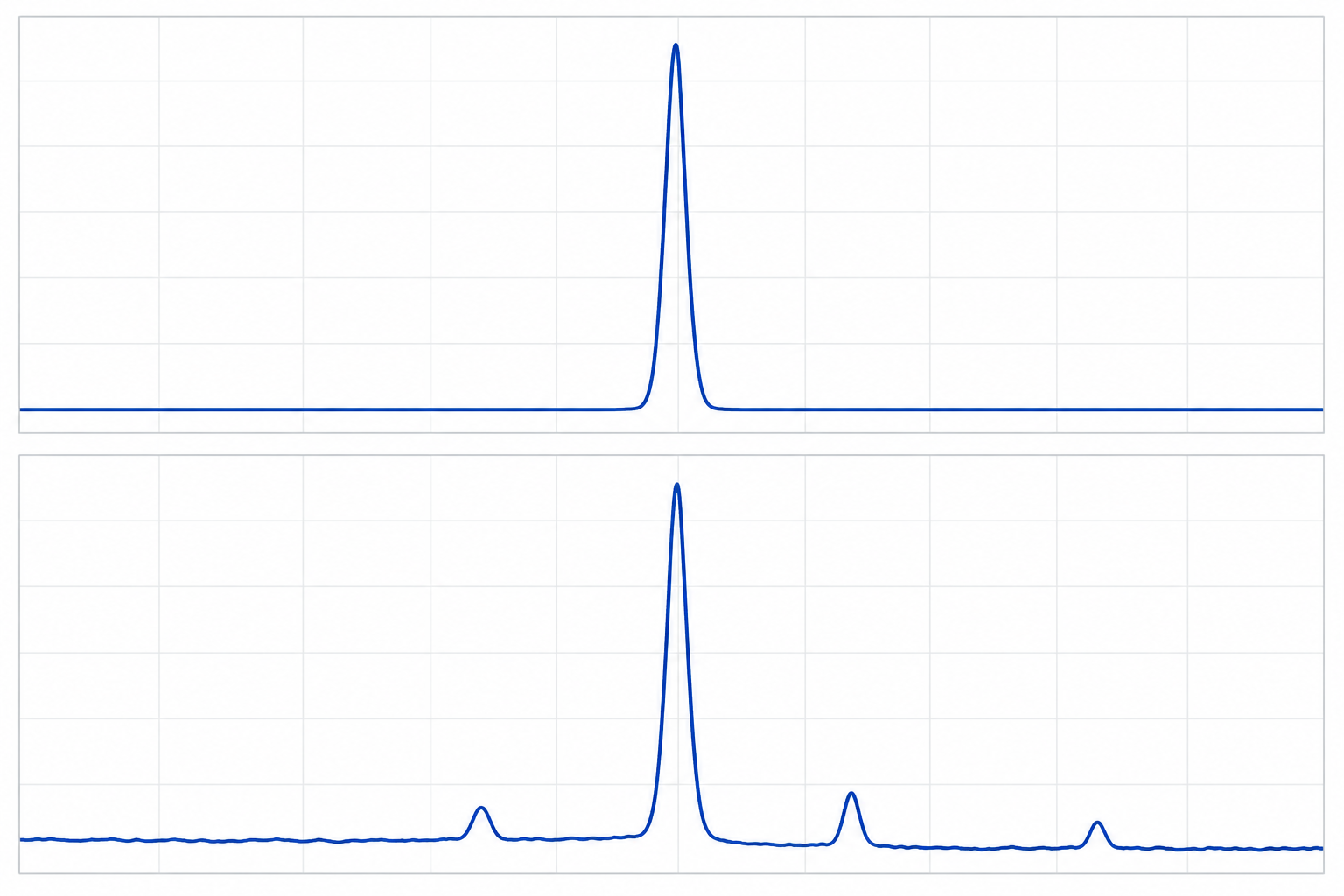
Area-under-the-curve confirms zero residual synthesis reagents or scavengers.
Verifies precise molecular mass to confirm amino acid sequence identity.
LAL assay guarantees absence of pyrogenic bacterial cell wall endotoxins.
Purity is not the whole product
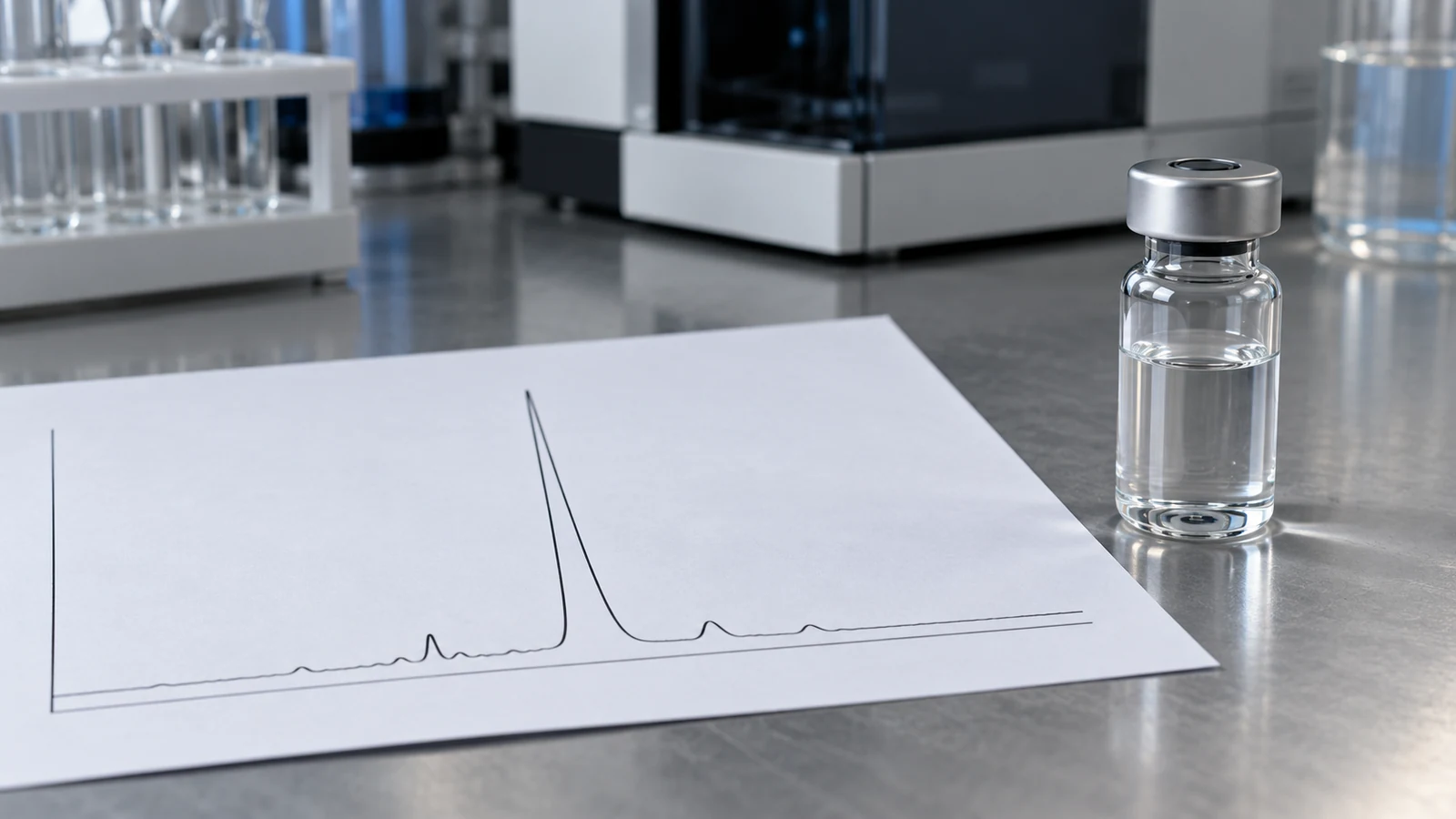
A certificate of analysis is a lab report of chemical tests run on a submitted sample. Retail sellers showcase two tools:
High-performance liquid chromatography, or HPLC, is a separation technique. A technician pumps a dissolved sample under high pressure through a packed column. Different molecules emerge at different speeds, creating distinct peaks on a graph. The main peak area relative to background impurities determines the reported purity percentage.
Mass spectrometry is an analytical method that ionizes molecules and measures their mass-to-charge ratio, verifying that the molecular weight matches the theoretical chemical formula of the intended peptide.
Those tests answer one narrow question: does this sample appear to contain the peptide on the label?
They do not answer whether the product is safe for human tissue. An identity test does not prove sterility, measure bacterial endotoxins, confirm residual synthesis cleanup, or prove the digital report belongs to your vial. Purity is an identity score wearing a safety costume.
Purity is an identity score wearing a safety costume.
Research chemical versus medicine
The fine print on gray-market websites serves a specific legal job because approved drugs and laboratory chemicals live in separate regulatory buckets. Unregulated websites borrow paperwork from the laboratory supply sector, printing research-use-only labeling, which is a legal classification stating that a substance is sold strictly for laboratory research and never for human consumption or medical treatment.
In reality, research-use labeling is seller protection, not buyer protection. That classification means the seller makes no claim to be a pharmacy. If a vial is unsterile, degraded, or mislabeled, the seller bears no product liability for human injury, documenting the transaction as a sale of laboratory reagents.
Key idea
Bulk powder often passes through overseas brokers and domestic relabelers before landing in polished retail packaging. A professional website and a sale price are not a quality system; the research-use label is a legal defense, not a purity guarantee.
The Foolproof U-100 Insulin Syringe Dosing Scale
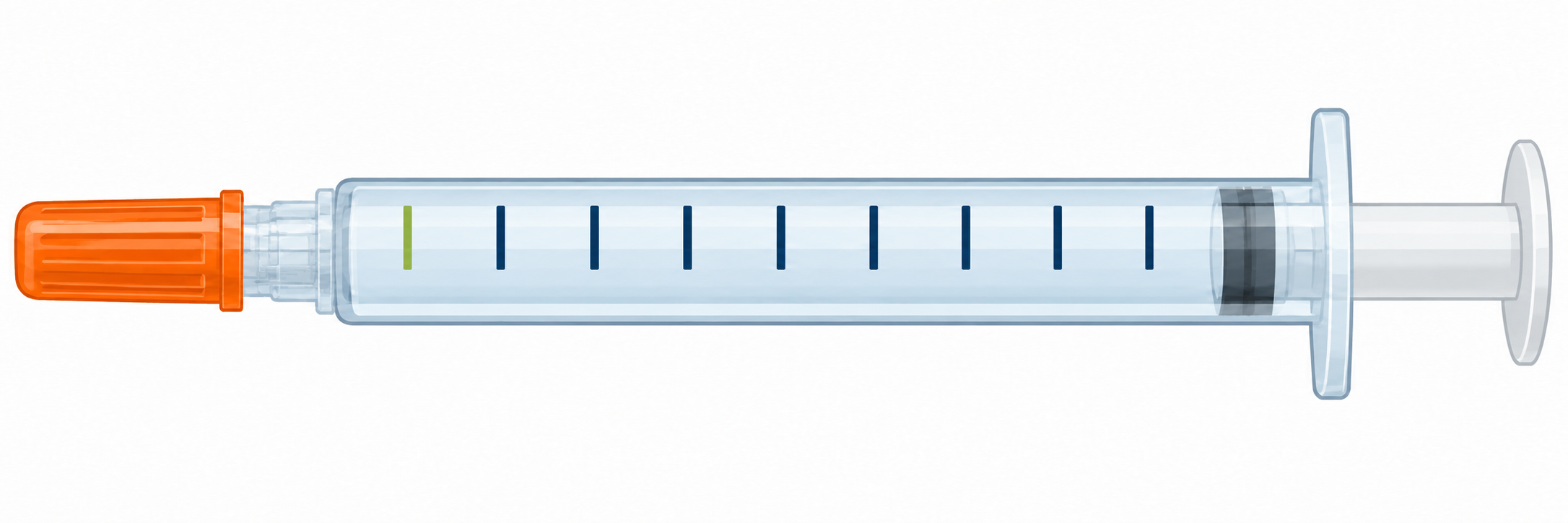
Pull to exactly 10 units on standard 100-unit U-100 syringe.
Pull to exactly 20 units on standard 100-unit U-100 syringe.
Provides 20 days of daily tissue repair signaling per 5mg vial.
HPLC Chromatography
Area Under Curve. Must demonstrate a single sharp absorbance peak exceeding 98.0%, confirming absence of truncated peptide sequences or residual organic synthesis solvents.
Mass Spectrometry
The Fingerprint. Liquid chromatography-mass spectrometry (LC-MS) confirming molecular weight exact down to within ±1 Dalton of theoretical sequence weight.
Endotoxin LAL Testing
Pyrogen Screening. Ensures bacterial lipopolysaccharide endotoxin levels are below 5.0 Endotoxin Units per milligram (EU/mg) to prevent sterile injection fevers.
Lyophilized Cake
Physical State. Freeze-dried solid puck with zero moisture or gummy discoloration. Reconstitutes instantaneously into crystal-clear solution with zero particulates.
What a certificate of analysis does not inspect
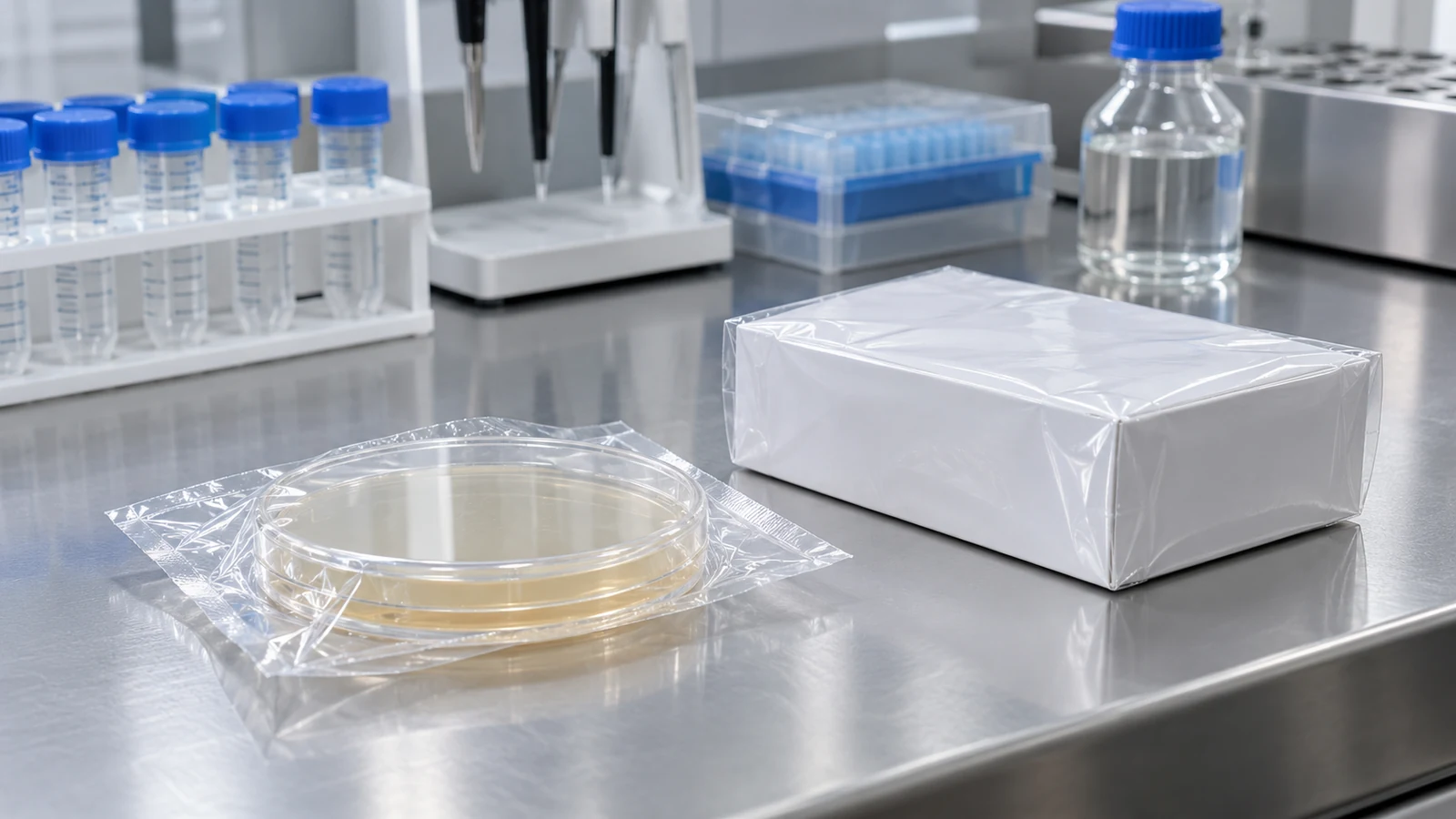
Sterility is the total absence of viable, living microorganisms such as bacteria and fungi. A solution can test clean on an identity run while carrying living microbes that multiply inside human tissue.
Endotoxins make this hazard concrete: they are heat-stable lipopolysaccharide fragments of Gram-negative bacterial walls, completely invisible to standard HPLC chromatography.
When an endotoxin enters human tissue, the innate immune system mounts an emergency defense. White blood cells react as if facing systemic infection, triggering shaking chills, spiking fevers, and profound fatigue. In online communities, users often shrug this off as the peptide flu, treating it as an unavoidable adaptation or a sign that the compound is working. That reaction is not a healing signal. It is an innate immune alarm responding to bacterial debris that never belonged in the vial.
Licensed sterile compounding facilities test for this hazard directly using quantitative endotoxin assays and sterility cultures that require days of incubation to confirm that nothing grows. Most retail certificates of analysis omit these tests because sterility verification is expensive and destroys product volume. The absence of a sterility line on a certificate of analysis is not proof of sterility; it is proof the test was not sold.
Peptides are built on solid resin and cleaved with harsh reagents and acids. Pharmaceutical manufacturing purifies the compound to exchange toxic counterions for safe, biocompatible forms. Gray-market manufacturing frequently skips this cleanup, leaving residues that cause severe tissue irritation despite a clean peak.
A digital QR code is not chain of custody. Vendors can test a clean sample, receive an authentic report, and use that document to market thousands of uninspected vials from an uninspected batch.
Lyophilized powder, the freeze-dried cake formed under vacuum to stabilize peptide chains during transport, only protects the molecule until the stopper is punctured. Once liquid is added, ambient heat, light, and handling change the contamination math and decide what reaches tissue.
Three maps, not one panic

Online discussions often collapse complex regulatory boundaries into a single panic about government bans. To evaluate the market clearly, you must separate three distinct legal systems:
- Food and Drug Administration (FDA): Regulates commercial drug distribution, therapeutic claims, and compounding practice standards.
- Controlled Substances Act: Classifies drugs with potential for abuse into criminal enforcement schedules.
- World Anti-Doping Agency (WADA): Establishes anti-doping rules and substance prohibitions for competitive sports.
Federal law splits compounding into two tiers: 503A pharmacies prepare patient-specific prescriptions under state oversight, while 503B outsourcing facilities batch sterile preparations under federal manufacturing standards.
Under federal rules, bulk ingredients must be approved drug components, hold an official pharmacopeia monograph, or appear on the FDA bulk substances list. That active directory shifts nominated substances between interim categories as evaluations proceed. Many tissue-repair compounds have faced placement into restricted interim categories such as Category 2, limiting compounding availability. Most repair peptides from Guide 5 are not approved drugs; an unapproved vial of BPC-157 is fundamentally different from prescription products like tesamorelin or regulated semaglutide pens.
The second map covers criminal controlled-substance statutes. Repair peptides like BPC-157 are not scheduled anabolic steroids, but being unscheduled is not legal authorization for sale as a medical treatment.
The third map governs athletic competition under the WADA prohibited list, operating under strict liability. WADA prohibits BPC-157 at all times under Category S0 for non-approved substances, while growth-hormone secretagogues fall under Category S2 for peptide hormones. A research-use sticker does not provide a therapeutic-use exemption.
The buyer often cannot verify what arrived
Sourcing in this environment spans direct-to-consumer websites, overseas chemical brokers, and licensed compounding pharmacies working within existing regulations. Outside of an inspected pharmacy, buyers face the same central problem: you cannot independently verify what arrived inside the box.
Online discussions and forum consensus provide social reassurance, but peer endorsement is not a quality system. An anonymous user reporting that a vial caused no immediate illness offers zero evidence regarding microbial sterility or endotoxin loads.
Questions that survive a cheap listing
When facing the price gap between regulated pharmacy products and cheap online listings, four fundamental questions clarify the real tradeoffs:
Why does a pharmacy product cost more if the sequence is identical? You are paying for the sealed pharmacy stack: sterile cleanrooms, culture quarantine, endotoxin limits, physiological salt exchanges, and an institutional license. A research site charges for powder and an identity printout, making clean arrival luck rather than a manufacturing control.
Cannot a third-party laboratory settle the question? Independent testing provides useful data, but cannot solve the sampling dilemma because a lab tests only the submitted vial. That test cannot guarantee the sterility of thousands of warehouse vials, nor does retail testing evaluate microbiological safety.
If compounding rules tighten, is the gray market the only option? When compounding rules tighten, demand predictably spills into unregulated channels. That displacement is understandable, but market migration is not a safety upgrade, and packing tape never equals a pharmacy seal.
Does market skepticism mean peptides do not work? No, because biological validity and market skepticism are separate realities. As established in Guide 4, signal, receptor, and response remain real science, but a contaminated product corrupts that signal before reaching tissue.
The seal was the product
A printed label is not a pharmacy seal.
A certificate of analysis is an identity report. HPLC and mass spectrometry detect whether a molecule showed up, not whether the facility was clean. Purity is not sterility; endotoxins, bacteria, and synthesis residues thrive between those words. Research-use labels protect sellers, not consumers, and market displacement is predictable rather than safe.
Guide 11 examines where peptides actually fit in clinical care. The molecule can work, and the vial in the mail can still be junk. Wanting a biological compound and possessing a trustworthy product are two entirely different steps.
Educational content only. It is not individual medical advice.