Prerequisites
The Wrong Unit of Learning
Walk into almost any gym and you will find a wall of machines, each with its own weight stack, track, and laminated card. Master forty machines and you might assume you have acquired forty skills. That is the wrong unit of learning.
A barbell deadlift, lifting a heavy couch, and picking up a toddler look completely different. Yet your nervous system coordinates them identically: hips fold backward, knees stay soft, the spine remains a rigid beam, and posterior muscles produce the force. They are the same pattern performed on three different objects. Upper body work follows the same rule. A push-up, a bench press, and shoving a stalled car all ask chest, shoulders, and triceps to push resistance away from your torso.
You do not need to memorize dozens of exercises. You need to master patterns. Exercises are dialects; patterns are the underlying language. Master the pattern once, and your body knows how to handle a barbell, a dumbbell, a machine, or an awkward box safely.
The Alphabet: Six Patterns
A movement pattern is a category of motion defined by how your joints coordinate to produce force, regardless of the equipment. Just as letters build a language, six movement patterns build nearly every physical task you perform.
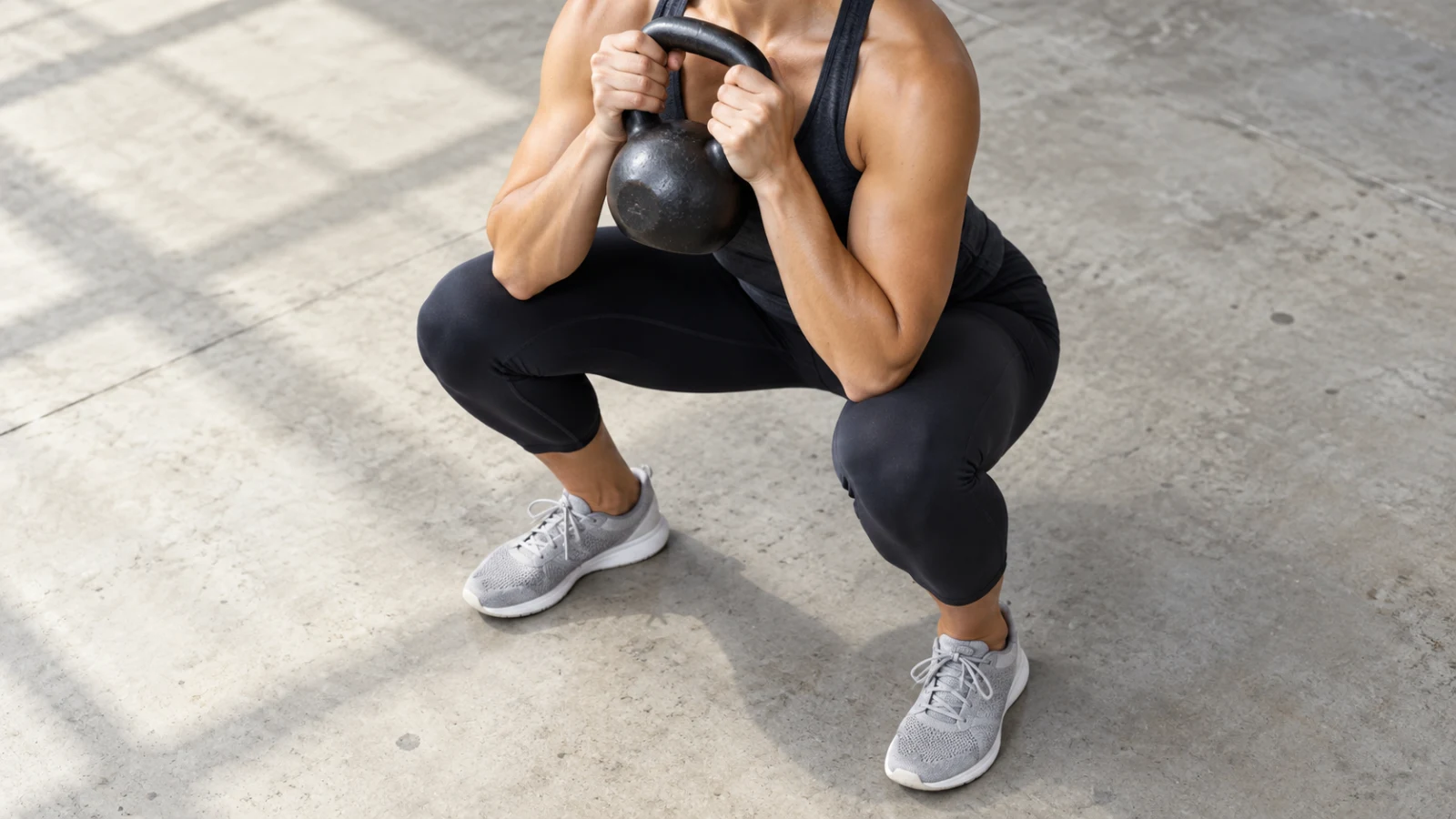
- The Squat. To squat is to lower and raise your center of mass by bending at your hips and knees together, keeping your torso relatively upright. You squat whenever you sit in a chair, get off the toilet, or crouch to a low shelf. The lunge is a split-stance variation of this pattern, challenging each leg independently.
- The Hinge. A hinge is bending primarily at the hips with soft knees and a neutral spine, shifting your pelvis backward to lower your torso. While a squat drops your hips downward, a hinge drives your hips backward with nearly vertical shins. You hinge when lifting a heavy box, moving a couch, or picking up mulch. The hips fold; the spine stays rigid. In the gym, this is the deadlift, Romanian deadlift, and kettlebell swing.
- The Push. A push drives an object away from your torso, or drives your body away from a surface. It splits into two directions:
Horizontal push: pressing straight in front of your chest, such as a push-up, bench press, or shoving a heavy door. Vertical push: pressing upward overhead, such as an overhead press or hoisting luggage into an overhead bin. Vertical pushing recruits the same pressing muscles while demanding significantly greater active shoulder mobility.
- The Pull. The pull mirrors the push, drawing an object toward your torso or your body toward an anchor. It also splits into two directions:
Horizontal pull: drawing an object toward your ribs, such as a row or pulling a cord to start a lawnmower. Vertical pull: drawing an object down or pulling yourself up, such as a pull-up or hauling yourself out of a pool. Pushing without pulling creates an unbalanced shoulder limited to one dialect.
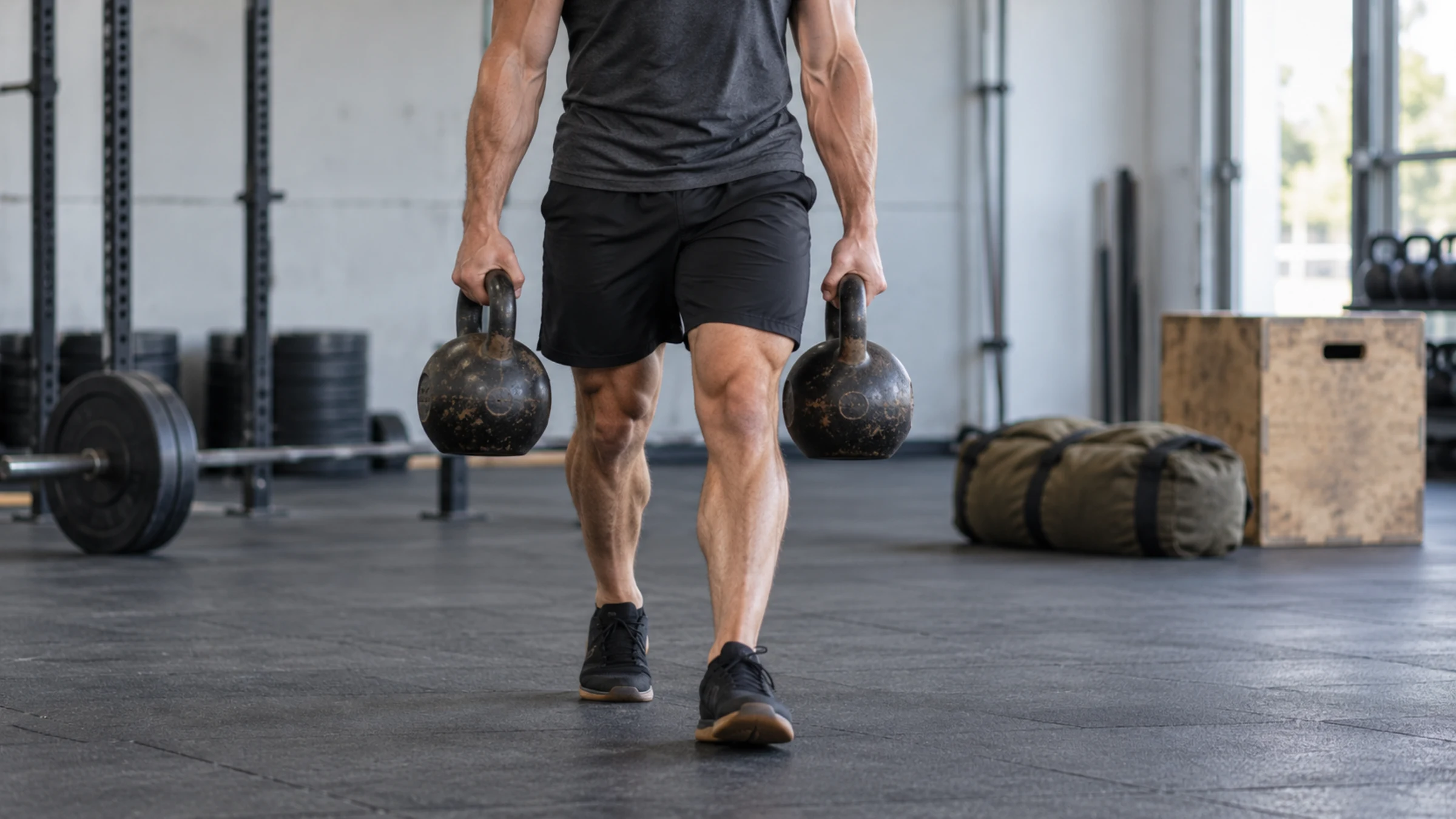
- The Carry. A carry is moving across distance while supporting a load. It is the most neglected gym pattern and the most common daily demand: carrying groceries, walking with luggage, or holding a child on one hip. A loaded carry demands that your grip, shoulders, and trunk hold posture while your legs walk. The walk is the test; the weight is the question.
- Rotate and Anti-Rotate. This pattern governs twisting force through your trunk:
Rotation: generating twisting power through your hips and core, such as swinging a golf club or throwing a ball. Anti-rotation: resisting an external twist to keep your spine square and stable while force acts unevenly across your body. Anti-rotation dominates daily life. Carrying a heavy bucket, holding a child on one hip, or catching yourself when slipping all rely on your core resisting unwanted rotation.
- Squat: Primary joint action: knee and hip bend, upright torso. Everyday life example: sitting in a chair and standing back up.
- Hinge: Primary joint action: hips push backward, soft knees, neutral spine. Everyday life example: lifting a low, heavy box or couch off the floor.
- Push: Primary joint action: upper body presses load away (horizontal or vertical). Everyday life example: pushing a stalled car or hoisting luggage overhead.
- Pull: Primary joint action: upper body draws load closer (horizontal or vertical). Everyday life example: starting a lawnmower or hauling yourself out of a pool.
- Carry: Primary joint action: walking under load while holding posture. Everyday life example: hauling groceries from the car to the kitchen.
- Rotate / Anti-Rotate: Primary joint action: producing or resisting twisting force through trunk. Everyday life example: swinging a golf club or balancing a child on one hip.
Every Pattern Has a Mover and a Holder
Every pattern asks a few joints to move and the rest to hold steady while the load passes through. Which joint moves and which joint holds is the real job the exercise trains.
Squat
Knees and hips bend with the chest tall, like sitting down into a chair and standing back up.
Hinge
Hips push back with soft knees and a flat back, the way you reach for something low and heavy.
Push
The arms drive a load away while the shoulder blades stay anchored on the ribcage.
Pull
The arms draw a load closer while the shoulder blades re-anchor and stay pinned down.
Carry
You walk while holding a load, so the trunk and shoulders keep posture upright on their own.
Rotate / Anti-Rotate
The trunk creates a twist, or resists one, while the spine stays square and steady.
Why Patterns Transfer and Single Exercises Fail
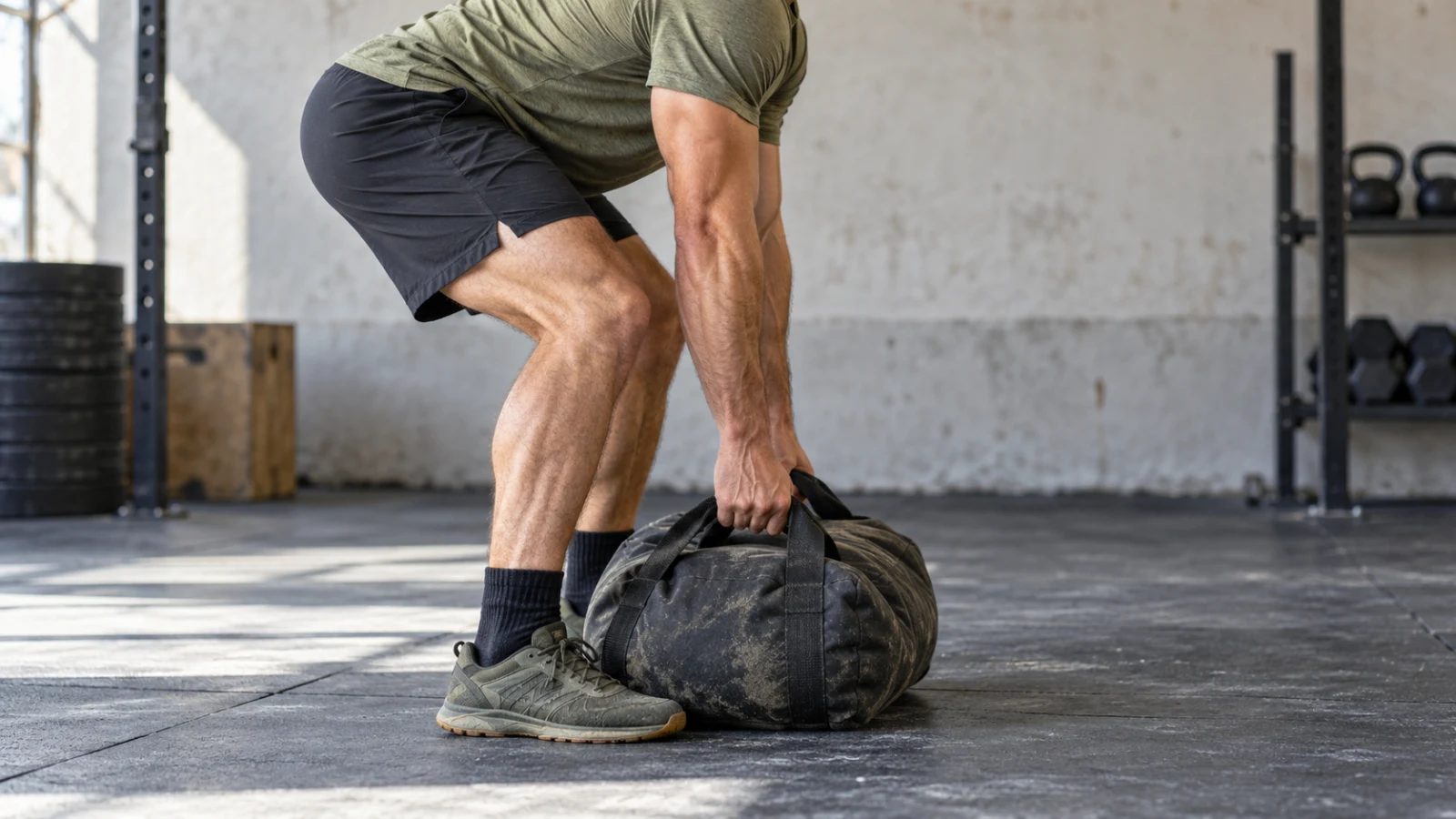
If you only practice the hinge with a barbell in one stance on a flat gym floor, you have mastered only one narrow version of that movement. Real life never loads you in that pristine shape. Life gives you an asymmetrical couch, a shifting duffel bag, or a box wedged in a trunk.
What transfers to life is not the specific exercise, but the pattern: your nervous system's ability to organize your hips, spine, and legs into a hinge regardless of the object. This is why someone who deadlifts heavy weight with perfect form can still tweak their back on an awkward box. They never generalized the pattern; they grooved a single exercise track.
Training a pattern across multiple shapes, implements, and stances turns gym strength into real-world capability. A hinge with a kettlebell, a sandbag, or a single leg are all variations of the same root action. Practice the letter in a few different fonts. Do not memorize a single word and call it literacy.
Load-Bearing Joints and the Stability Rule
Each pattern depends on specific joints doing their assigned jobs. In earlier guides, we defined the difference between mobility and stability. Mobility is the active range you control with your muscles. Stability is the ability of your frame to hold position and resist unwanted movement under load.
The squat and hinge depend on hip mobility paired with spinal stability. The hip is a deep ball-and-socket joint built for large ranges of motion. The lumbar spine is built for stiffness to protect the spinal cord. If your hips lack the mobility to fold deeply, your lower back will round to compensate, because something has to fold.
A rounded spine under heavy load is significantly more vulnerable to injury than a neutral spine. In neutral alignment, vertebrae absorb compressive forces safely. Rounding your lower back under load tilts the vertebrae and directs damaging shearing forces into your spinal discs.
The push and pull patterns rely on shoulder mobility paired with scapular stability. Scapular stability is the ability of the muscles around your shoulder blades to anchor them firmly against your rib cage when force passes through your arms. The shoulder socket is shallow. Moving heavy weight with wandering shoulder blades is range without a frame, which damages the joint.
The carry is a dynamic stability test disguised as a strength exercise. It forces your core and shoulder stabilizers to lock your posture while your legs walk. This explains why an unloaded movement can look clean and still fail under weight. An unweighted squat demands little stability. Adding load immediately exposes whether your frame holds. Load exposes the gaps that empty movement conceals.
The empty movement is a rehearsal; the loaded rep is the exam.
Neutral Spine vs. Rounded Under Load
The same weight asks very different things of your back depending on how your spine is stacked when you lift it. Neutral spreads the load across the whole disc; rounding pushes it toward the back edge, where the disc tolerates far less.
Vertebrae stay stacked, so the load spreads evenly across the disc. This is the position to brace and lift from.
Rounding tilts the vertebrae and shifts force toward the back edge of the disc, which is built for far less of it. That is why the back rounds on the rep that hurts.
The Role and Limits of Gym Machines
This principle is not an attack on gym machines. A machine that guides you along a fixed path is a valuable tool for building base strength safely, rehabilitating an injury, or isolating a muscle group.
The problem is stopping there. A leg press guides the weight along steel rails and supports your back with a pad. The machine does the organizing work for you. That builds quad strength, but it cannot teach hips and spine to coordinate a squat in free space. When lifting a heavy couch, there is no back pad and no track. Your nervous system must organize your joints, balance the load, and brace your spine on its own.
Key idea
Use machines as a useful dialect, not your entire language. Real life will not provide a back pad.
Six Letters, Unlimited Words
Six letters: squat, hinge, push, pull, carry, and rotate or anti-rotate. Nearly every physical action you perform is built from these six elements.
When you understand this alphabet, fitness stops being an overwhelming catalog of machines. It becomes an orderly system of six skills. Train a variation of each pattern each week. Change the implements, stances, and angles periodically so your body learns to adapt.
That is what functional movement actually means. It is not circus tricks on balance boards. Functional movement is a foundational pattern trained with enough depth, variety, and stability that it holds up when life demands it in an unfamiliar shape.
Educational content only. It is not individual medical advice.