Prerequisites
The Biological Bottom Line
BPC-157 stimulates VEGF and VEGFR2 to sprout new collateral micro-capillaries into avascular tendon and ligament tissue, bringing oxygen and nutrients where blood supply was absent.
TB-500 (Thymosin Beta-4) upregulates actin monomer sequestering, giving repair tenocytes and fibroblasts the structural motility to physically migrate into the injury gap.
BPC-157 works through vascular endothelial signaling; TB-500 works through cytoskeletal actin dynamics. They do not compete for the same receptor.
Both peptides circulate systemically through the bloodstream. Subcutaneous administration away from the injury site still achieves targeted tissue uptake via local receptor upregulation.
A tendon stalls for two distinct reasons: delivery trucks cannot reach the lot, or workers never showed up. Those are not two sizes of the same problem.
Forum threads constantly argue over which compound is stronger. Comparing BPC-157 and TB-500 as if they were small glue versus large glue is a category error. Asking which is stronger assumes both compete for the same task. They represent two entirely different mechanistic requests: supply line delivery versus crew movement.
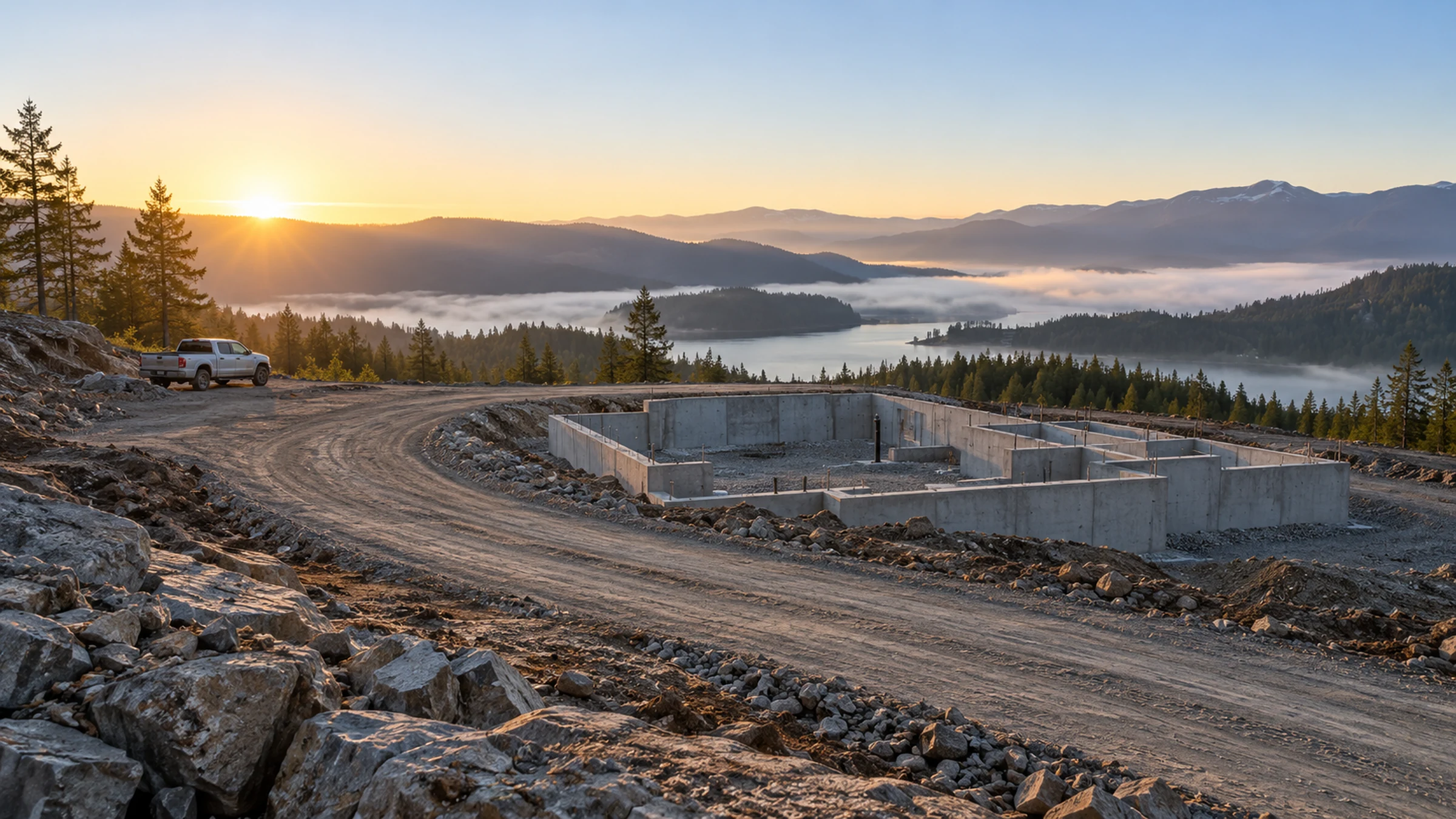
Picture a remote construction site. Can delivery trucks bring fuel to the lot? Are carpenters on site raising the structure? Pave the road, and you still need a crew. Mobilize the crew, and they sit idle without deliveries. BPC-157 maps to the access road. TB-500 maps to the crew. The signal is not the carpenter, and an instruction is not a building.
- BPC-157: The supply line signal. It prompts the body to establish vascular access so nutrients reach starving tissue.
- TB-500: The crew movement signal. It prompts repair cells to mobilize and physically crawl into an injury gap.
Not two sizes of glue

Tossing every recovery compound into a generic healing-peptide bucket lets marketing sell arbitrary strength tiers and skip the real question: which biological bottleneck is actually stuck?
As established in Guide 4, a repair signal operates through specific receptor links. Healing follows an orderly cascade: hemostasis stops bleeding, inflammation clears debris, proliferation multiplies repair cells, and remodeling organizes collagen fibers. A signal cannot skip this sequence. Numbing cleanup is not completing it; building over uncleared wreckage produces disorganized tissue. Furthermore, proliferation and remodeling require amino acids, metabolic energy, and mechanical load. No vial replaces those inputs.
The peptide asks. The tissue builds, or it does not. Confusing two distinct jobs with two potencies of glue is how shopping lists replace biology.
The peptide asks. The tissue builds, or it does not.
BPC-157 is the access-road signal
Four biological terms define how tissue receives blood:
- Hypovascular: Tissue with a sparse blood supply, such as tendons and ligaments.
- Endothelial cells: The flat cells lining the interior of all blood vessels.
- Angiogenesis: Sprouting new blood vessels from existing ones to restore circulation.
- Nitric oxide: A signaling gas produced in vessel walls that tells smooth muscle to relax, widening the channel for blood flow.
BPC-157 is a synthetic fifteen-amino-acid peptide derived from a protective sequence in gastric juice. In laboratory research, its story centers on blood flow, vascular regulation, and local tissue environment.
Think access road, not crew. Tendon injuries frequently stall because the tissue is hypovascular. Its core is often a watershed zone: an area so starved of blood that local cells lack oxygen and nutrients to rebuild matrix.
An access-road signal prompts endothelial cells to begin angiogenesis, sprouting capillaries into the watershed zone. Supporting nitric oxide tone keeps vessels open, while adhesion chemistry helps repair cells attach to vessel walls and enter tissue. This is why BPC-157 is studied in tendons, ligaments, and gut lining, where blood delivery is the primary bottleneck.
Precision matters. Claiming BPC-157 is angiogenesis collapses a chemical signal into a finished anatomical outcome. The peptide only asks; the tissue must still build vessels. A specific human cell-surface receptor for BPC-157 remains uncharacterized in peer-reviewed literature, and large-scale randomized human orthopedic trials have not been run. Mechanism confidence is not outcome confidence.
BPC-157 Angiogenic Capillary Sprouting
Paratenon Arteriole
Direct high-pressure blood flow carrying oxygenated erythrocytes, systemic glucose, and circulating leukocytes. Ends abruptly at the fibrocartilage boundary.
Hypoxic Core (0% Flow)
The avascular center of the tendon. Zero direct blood vessels. Hypoxia halts collagen remodeling and locks tenocytes in a state of cellular hibernation.
BPC-157 Angiogenic Ingrowth
VEGFR2 phosphorylation triggers endothelial budding. Collateral micro-capillary arcades penetrate the watershed zone, restoring nutrient inflow.
Activates early growth response-1 (Egr-1) to trigger endothelial tube formation.
Restores micro-vascular diameter and local shear perfusion across scarred tendon.
Allows tenocytes and raw amino acids to physically reach the tear defect.
TB-500 is the crew-movement signal

Five biological terms explain how repair cells travel to an injury:
- Thymosin beta-4: A natural protein present in high concentrations in blood platelets and wound fluid.
- Cytoskeleton: The internal protein scaffolding that gives a cell its shape and mechanical structure.
- Actin: The primary protein building block of the cytoskeleton, alternating between loose units and assembled filaments.
- Fibroblasts: The primary repair cells that synthesize collagen and build structural connective tissue.
- Migration: The active physical process of repair cells crawling from healthy borders into an open defect.
TB-500 is the street name for a synthetic fragment of thymosin beta-4. While thymosin beta-4 contains forty-three amino acids, TB-500 represents an active sub-sequence marketed to mimic the natural molecule.
Think crew, not road. In a tear, fibroblasts and endothelial cells frequently sit at the margins, unable to cross the gap. To cross, a cell must reshape its cytoskeleton, extending forward and anchoring to surrounding matrix.
This crawling depends on actin dynamics. Contractile actin allows muscle fibers to slide and lift weights. Motility actin is different: it is a cellular locomotion engine, assembling and disassembling filaments at the membrane's leading edge to crawl across a defect.
Thymosin beta-4 regulates actin by sequestering loose units so they can assemble when motion is required. TB-500 delivers that motility signal, prompting fibroblast migration and helping endothelial cells crawl into position. But the signal is not the carpenter, nor is it spackle in a tear. The cell must still expend energy, assemble its cytoskeleton, and build matrix.
Street labels drift, and whether a gray-market vial contains genuine thymosin beta-4 sequence is an unverified gamble. Even when authentic, the molecule remains a cellular prompt, not structural collagen in a vial.
TB-500 Actin Monomer Treadmilling & Cell Migration
G-Actin Sequestering
TB-500 binds 1:1 with globular G-actin monomers, preventing premature crystallization inside the cell and maintaining a massive high-energy reservoir.
Lamellipodia Protrusion
Under chemotactic signals from the tear defect, G-actin instantly polymerizes into filamentous F-actin at the cell's leading edge, pushing the membrane forward.
Defect Infiltration
Focal adhesion complexes grab the extracellular matrix, pulling the cell body forward. Tenocytes physically walk across the tear gap to start remodeling.
TB-500 (the active 43-amino-acid segment of Thymosin Beta-4) acts as the primary intracellular actin-sequestering protein in human biology. By maintaining an unpolymerized G-actin reserve, it gives tenocytes and stem cells the mechanical propulsion required to physically walk into tissue tears.
Two jobs on a whiteboard is not a guarantee
On a whiteboard, stacking BPC-157 and TB-500 looks obvious: one opens the road, the other mobilizes the crew. Because they address different bottlenecks, combining them avoids duplicating the same instruction.
However, complementary mechanisms are not biological synergy. Two signals simply mean two separate requests were made. Receptor saturation sets a firm ceiling: once receptors are occupied, adding more peptide produces zero additional repair. Furthermore, distinct signals help only when both receptors are present and attached to cells capable of answering.
Even when both signals are received, the cell requires substrate, load, and recovery:
- Food: Delivers amino acids to synthesize collagen. A signal cannot conjure protein out of thin air.
- Movement: Progressive mechanical load directs fibroblasts to align collagen fibers. Without load, tissue forms as weak scar tissue.
- Sleep: Governs systemic hormonal recovery and protein synthesis.
Neither compound replaces progressive load. A tendon lacking mechanical tension will not remodel simply because capillaries sprouted. A defect lacking viable cells will not close simply because a motility memo arrived.
Safety boundaries also apply. Because BPC-157 promotes blood vessel signaling, caution is warranted near active malignancy. Tumors recruit blood vessels to sustain growth. This is not a reason to label repair peptides as cancer-causing agents; it is a narrow biological caution. You do not send pro-vascular instructions toward an active tumor.
BPC-157 (Gastric Pentadecapeptide)
The Infrastructure Builder. Sprouts collateral capillaries into hypoxic, avascular tendon watershed zones via VEGFR2 activation. Without blood supply, cells suffocate.
TB-500 (Thymosin Beta-4)
The Cellular Marching Order. Sequestrates G-actin monomers, upregulates cell motility, and downregulates fibrotic scar tissue formation. Gives repair cells the legs to reach the site.
Combined Co-Administration
The Complete Loop. BPC-157 paves the micro-capillary highways; TB-500 drives the cellular construction trucks down those highways into the center of the injury defect.
Name the stuck job, not the stronger vial
Asking whether BPC-157 or TB-500 is stronger remains the wrong question. A wrench is not stronger than a hammer; they perform completely different mechanical jobs.
If these compounds have plausible mechanisms, why are they not FDA-approved drugs? The answer lies in patent economics. Bringing a drug through phase 3 trials costs hundreds of millions of dollars, funded only when protected by ironclad composition-of-matter patents. Natural gastric sequences and endogenous fragments cannot easily be monopolized. Without patent exclusivity, commercial sponsors will not fund human trials.
Yet economics does not excuse the evidence gap. Rodent data looks promising, but rodents heal connective tissue far faster than humans. Robust, large-scale human orthopedic trials remain absent. Plausible mechanisms do not prove clinical outcomes.
When discussing an injury with a clinician, focus on diagnosing the biological bottleneck rather than shopping peptide names:
- Which tissue is damaged, and is the area starved of blood flow?
- Does the defect lack migrating cells to bridge the gap?
- Has the initial inflammatory cleanup concluded, or is the area actively clearing debris?
- Are dietary protein and progressive mechanical loading protocols in place?
Do not use these questions to self-assign a stack. Understanding the difference between supply lines and crew movement provides a framework to evaluate rehabilitation with a physician, rather than treating two distinct signals as different potencies of one cure.
The road was never the crew
The construction site, access road, and work crew were a translation. Put the metaphor down.
BPC-157 acts on blood vessel signaling, endothelial response, and local perfusion. It represents a request to establish a supply line to isolated tissue.
TB-500 acts on actin dynamics and cytoskeletal mobility. It represents a request for structural repair cells to crawl forward into a defect.
These are two different jobs, not two potencies of healing glue. In both cases, the peptide merely delivers a message; the living cell still carries out construction.
Healing remains governed by biological sequence, substrate, and load. A famous name cannot skip a repair phase, cannot manufacture Type I collagen, and cannot substitute for a squat.
Key idea
A stalled lot may need an access road, and it may need a crew. But neither the road nor the crew is the building itself.
Educational content only. It is not individual medical advice.