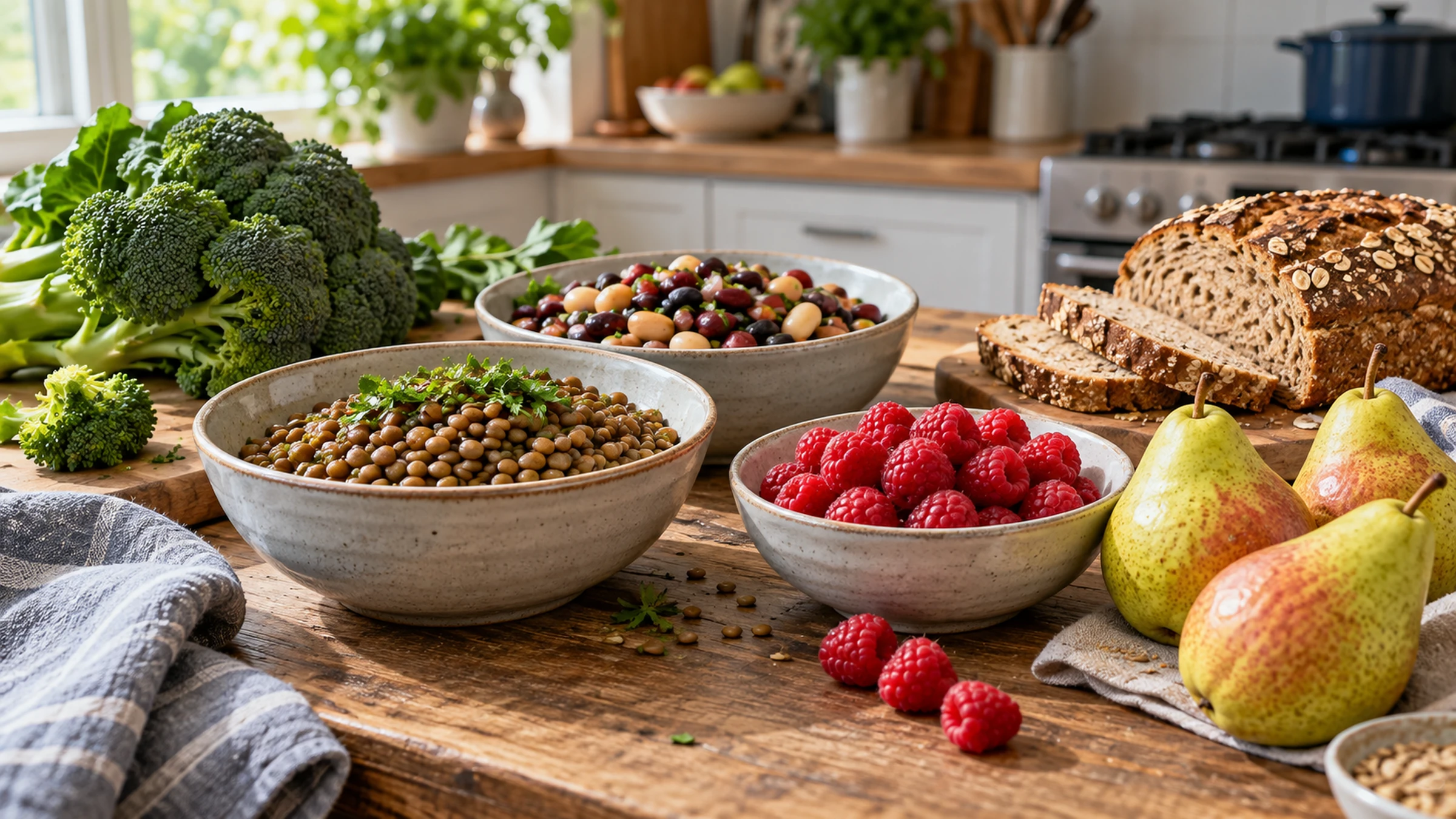
Prerequisites
The Bottom Line on Fiber & the Gut
Fiber is the only nutrient your cells cannot break down; you deliver it directly to the bacterial workforce in your colon.
Soluble fiber dissolves into a thick viscous gel that slows glucose; insoluble fiber provides mechanical bulk and gut motility.
Microbial fermentation produces short-chain fatty acids (butyrate, acetate, propionate) that fuel colonocytes and soothe inflammation.
Eating 30+ diverse plant foods per week builds a resilient microbial ecosystem capable of fighting off pathogens.
If you ate a bowl of oats this morning, your human cells did not digest the fiber in them. You swallowed the oats, moved them through your stomach, and passed them through twenty feet of small intestine without breaking that fiber down. Instead, you delivered it intact to a workforce of trillions of bacteria living in your colon. Those bacteria dismantled the fiber and paid you in a specialized fuel your gut lining prefers over glucose.
Most people treat dietary fiber as roughage: an abrasive filler in bran cereal whose only purpose is to relieve constipation. If bathroom habits are fine, the thinking goes, fiber is optional.
That view misses almost everything fiber does. Fiber is not inert waste. It is food, but it is food for your gut bacteria rather than for your human cells. It is the one nutrient you deliberately hand over to an internal workforce. What those microbes do with that delivery determines how well your gut barrier holds together, how calm your immune system stays, how steady your blood sugar remains after meals, and how full you feel throughout the day.
Two Fibers, Two Physical Jobs
Fiber is not one single substance. It comes in two distinct physical forms that perform completely different tasks: soluble fiber and insoluble fiber.
Soluble fiber is plant fiber that dissolves in water. When it encounters liquid in your stomach, it swells into a thick, viscous gel. You can see this when oats or chia seeds sit in water: the liquid turns into a slow-moving gel. Inside your digestive tract, that gel acts as a physical brake. It slows how quickly food empties from your stomach, coats the intestinal wall, and delays how fast digestive enzymes reach starches and sugars. Common sources include oats, beans, lentils, peas, apples, barley, and chia seeds.
Insoluble fiber is plant fiber that does not dissolve in water. It stays structurally intact as it travels through your digestive system. It acts like a sponge, absorbing water without dissolving, which adds bulk to the digestive contents. That bulk presses against the intestinal walls, triggering the muscular contractions that keep waste moving steadily through the colon. Insoluble fiber provides the structural rigidity in plants. Rich sources include wheat bran, raw vegetables, fruit skins, nuts, seeds, and the tough stems of dark leafy greens.
Most whole plant foods contain both types. You do not need to sort your plate into categories. What matters is understanding that they run two separate operations: soluble fiber builds a gel that slows digestion down, while insoluble fiber adds bulk that keeps waste moving forward.
- Soluble: Behavior in water: Hydrates into a dense gel. Primary physical job: Slows gastric emptying and buffers sugar absorption. Example foods: Oats, beans, lentils, apples, chia seeds.
- Insoluble: Behavior in water: Stays intact; absorbs water like a sponge. Primary physical job: Adds physical bulk and stimulates intestinal motility. Example foods: Wheat bran, vegetable skins, nuts, seeds.
Why the Body Skips Digestion on Purpose
To understand why fiber matters, look at how your body handles every other carbohydrate.
When you eat digestible carbohydrates like starches or table sugar, your body deploys specialized proteins called enzymes in your saliva, stomach, and small intestine. These enzymes act like precision scissors. They cut the chemical bonds linking sugar molecules together, breaking starches down into simple glucose. That glucose is then absorbed through the small intestine directly into your bloodstream.
Fiber is also a carbohydrate, but its sugar molecules are linked by chemical bonds that human enzymes cannot cut. When fiber reaches your small intestine, your enzymes slide off those bonds without breaking them. The fiber travels through the entire small intestine untouched.
That pass-through is not a digestive failure or an evolutionary defect. It is a biological division of labor. Your body leaves fiber intact on purpose so it arrives where its actual processors live. Evolution built a handoff between your cells and your gut microbes, not a single all-purpose digestive factory.
If your small intestine broke down fiber, you would absorb all of those carbohydrates high up in your digestive tract as additional glucose. Nothing would reach the lower digestive tract. By skipping digestion upstream, your body preserves the raw material so it can travel twenty feet down to where the bacterial workforce is waiting: the colon.
The Colon as a Fermentation Vat

The colon is not an empty waste chute. It functions as a biological fermentation vat, much like a brewing tank packed with living cultures.
The vat is populated by your gut microbiome: the community of trillions of microorganisms, mainly bacteria, living along your digestive tract. The colon contains the densest collection of microbes in your body.
While human cells make only a small set of digestive enzymes, your gut bacteria carry thousands of distinct enzyme genes. They have the exact biochemical tools needed to dismantle the stubborn bonds in plant fiber.
When intact fiber arrives in the colon, the bacteria begin fermentation. Fermentation is the chemical process where bacteria break down carbohydrates in the absence of oxygen, using the sugars for energy and producing new organic compounds as byproducts.
You provide the shelter and the raw plant material your body could not break down. The bacteria consume that fiber to sustain their population. In return, they release metabolic compounds that your body absorbs and puts to work.
The Anatomical Fermentation Pipeline
Tracing the physiological transit and microbial transformation of dietary fiber
Mouth & Stomach
Mechanical mastication. Zero human amylase can cleave beta-glycosidic bonds. Expands in gastric juice, triggering mechanoreceptors for early satiety.
Duodenum & Jejunum
Soluble beta-glucans hydrate into a viscous gel matrix. Retards enzyme access to starches, blunts glycemic spikes, and traps hepatic bile salts.
Ascending Colon
38 trillion anaerobic microbes feast on prebiotic oligosaccharides. Dense anaerobic fermentation produces gaseous byproducts and proton shifts.
Colonic Epithelium
Synthesis of Short-Chain Fatty Acids (Butyrate, Propionate, Acetate). Seals epithelial tight junctions and triggers systemic GLP-1 & PYY release.
The Payoff: Short-Chain Fatty Acids

The primary payoff of this fermentation is a class of compounds called short-chain fatty acids, or SCFAs. Short-chain fatty acids are small fat molecules produced exclusively by gut bacteria when they ferment dietary fiber. The three most common are acetate, propionate, and butyrate.
These compounds are not waste. They are specialized fuels and signaling molecules that run critical systems across your body.
Their first job is fueling your gut lining directly. Butyrate is a specific four-carbon short-chain fatty acid that serves as the primary fuel source for colonocytes, the cells lining your colon. Most cells in your body run on glucose from the bloodstream. Colonocytes are different: they draw up to seventy percent of their energy directly from butyrate inside the colon.
When colonocytes are well fueled by butyrate, they maintain strong, tight protein seals between neighboring cells. This barrier keeps bacteria and toxins inside the digestive tract and out of your bloodstream. When fiber intake drops and butyrate production stalls, those cells starve. The seals loosen, allowing irritants to leak into surrounding tissue.
Their second job is managing your immune system. Over seventy percent of your immune cells live right behind the gut lining. Because this barrier borders trillions of foreign bacteria, your immune system monitors it constantly. Short-chain fatty acids act as chemical messengers that help your immune system stay measured, training it to ignore harmless food particles and resident bacteria instead of reacting to every passerby. When bacteria produce abundant short-chain fatty acids, the immune system receives a continuous signal that the gut ecosystem is stable, keeping baseline inflammation low.
Their third job is appetite signaling. When short-chain fatty acids bind to receptors in the gut wall, they trigger the release of hormones that tell your brain you are nourished, slowing stomach emptying and steadying appetite.
Key idea
Without fiber, this entire supply chain fails. Starved of plant material, beneficial bacteria decline, and some begin consuming the protective mucus layer of your gut wall. Fiber is what keeps the wall fed and the defense system operational.
How Soluble Fiber Flattens the Glucose Wave
Beyond feeding the colon, fiber directly manages blood sugar during every meal.
When you eat soluble fiber, that gel forms inside your stomach and small intestine. Starches and sugars from the meal get trapped within the gel mesh. Instead of flooding your bloodstream all at once, the sugars must slowly diffuse out before enzymes can break them down.
This physical barrier transforms a potential surge into a measured trickle. Because glucose enters your blood gradually, your pancreas releases insulin in a calm, controlled stream rather than dumping a massive surge to manage a spike.
The difference shows clearly between a whole apple and a glass of apple juice. Both contain similar amounts of sugar. But in the whole apple, that sugar is locked inside plant cell walls and wrapped in soluble fiber, allowing the meal to burn like a seasoned log instead of kindling.
Turn that apple into juice, and the protective fiber structure is stripped away. The sugar hits your small intestine with no physical barrier. Enzymes break it down immediately, and glucose pours into your blood in minutes, forcing a rapid spike and a steep crash. Intact fiber is the physical brake that keeps blood sugar stable.
Intact fiber is the physical brake that keeps blood sugar stable.
An Ecosystem Shaped Meal by Meal
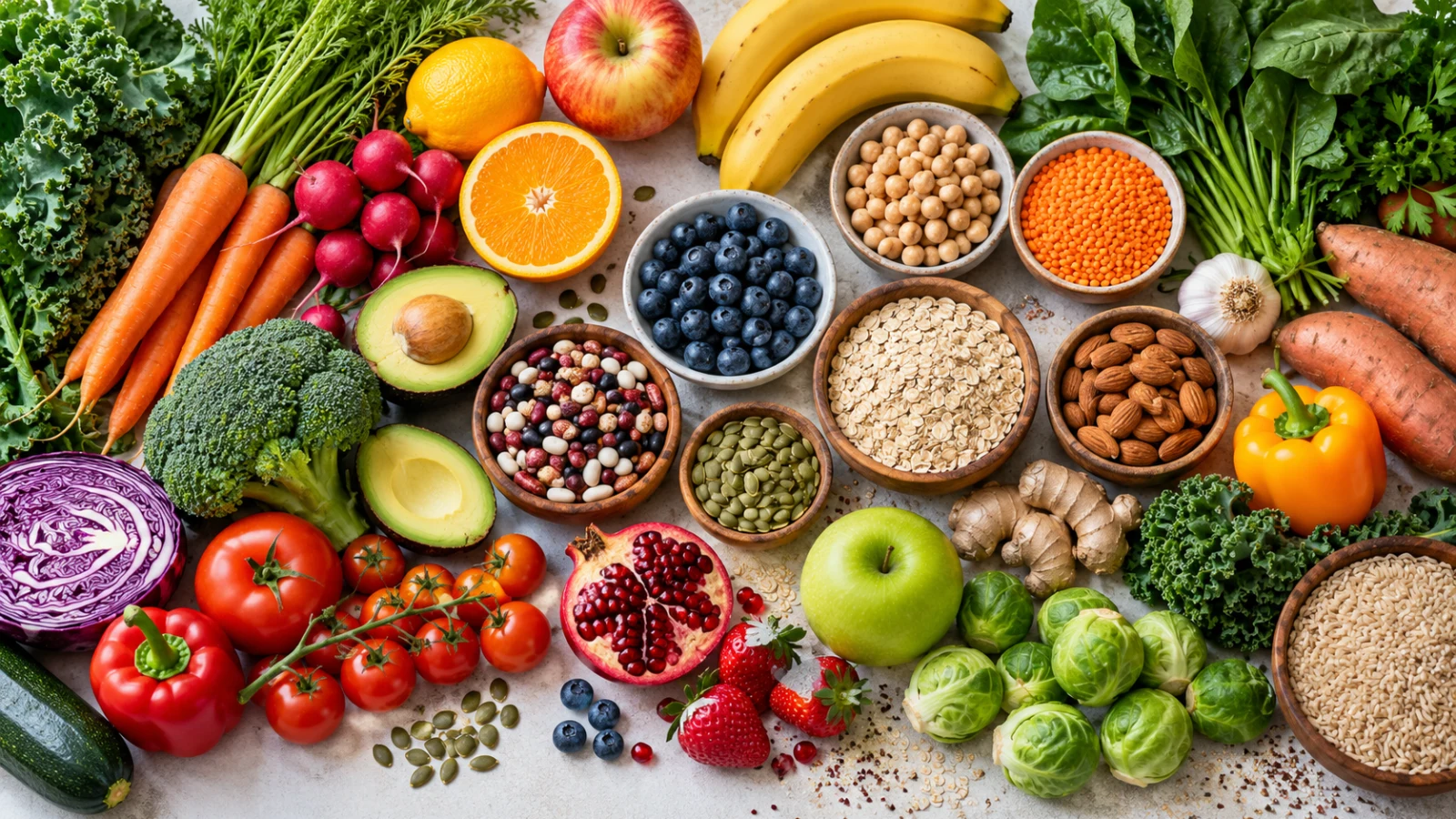
Zoom out from a single meal, and you are looking at an internal ecosystem that adapts to what you feed it.
Your gut microbiome contains hundreds of distinct bacterial species. Different species specialize in consuming different types of plant fibers. A bacterium equipped to ferment the beta-glucans in oats cannot break down the inulin in onions, the resistant starch in cooled potatoes, or the pectin in berries.
If you eat a narrow rotation of plants, you feed only a narrow subset of bacteria. The species that depend on other fibers starve and decline. A gut dominated by only a few species is fragile and less capable of defending against pathogens.
A diverse microbiome is resilient. When many bacterial species thrive, they occupy the gut wall and produce a wider variety of beneficial short-chain fatty acids.
This is why eating thirty or more distinct plant foods each week has become a recognized benchmark. Large population surveys found that people consuming at least thirty different plants per week hosted significantly more diverse gut microbiomes than those eating fewer than ten. While thirty is a practical target rather than an absolute biological cutoff, the rule holds: variety on your plate creates variety in your gut workforce.
Reaching that variety is simple when you count every plant: vegetables, fruits, whole grains, beans, lentils, nuts, seeds, herbs, and spices. Each brings a different fiber structure to the fermentation vat.
The 30-Plant Weekly Diversity Ledger
Targeting distinct fiber polysaccharides across the five foundational plant families
01. Alliums
- Garlic
- Leeks
- Shallots
- Red Onion
- Chives
02. Brassicas
- Broccoli
- Brussels Sprouts
- Kale
- Cabbage
- Arugula
03. Legumes
- Black Beans
- Lentils
- Chickpeas
- Edamame
- Split Peas
04. Polyphenols
- Blackberries
- Blueberries
- Pomegranate
- Dark Cocoa
- Walnuts
05. Ancient Seeds
- Chia Seeds
- Ground Flax
- Hemp Hearts
- Buckwheat
- Steel-Cut Oats
What to Do and What to Notice
Putting this biology into practice requires two simple rules:
First, increase fiber slowly over several weeks. If you eat a low-fiber diet and suddenly double your intake, your existing bacterial workforce will be overwhelmed. The bacteria cannot process the sudden surplus quickly enough, producing gas, bloating, and cramping. Increase your plant intake gradually so your bacterial population has time to multiply and adapt.
Second, drink enough water. Soluble fiber needs water to form its gel, and insoluble fiber needs water to swell and bulk. Taking in extra fiber without enough fluid can compact the material into a hard mass, worsening constipation instead of fixing it.
As your microbial workforce expands, you will notice three consistent changes:
Your bowel movements will become predictable and effortless. Well-formed, soft stools reflect a balanced mix of insoluble bulk and soluble moisture.
Your afternoon energy will steady out. By buffering glucose absorption, fiber eliminates the steep post-meal blood sugar drops that cause brain fog and fatigue.
Your hunger between meals will feel calm and gradual. Because short-chain fatty acids trigger satiety hormones, you stay full longer without urgent cravings.
Fiber is not roughage you take for constipation. It is the raw input for an internal supply chain. You deliver intact plant fiber, your microbiome turns it into fuel, and that fuel protects your gut wall, steadies your blood sugar, and supports your immune defenses.
Educational content only. It is not individual medical advice.